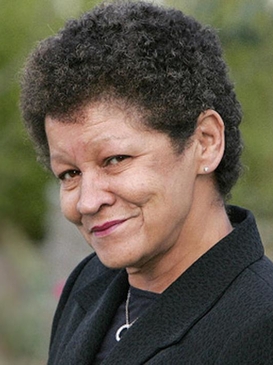
Dear Daughter Christine Buckley: A Legacy Forged in Resilience and Truth
The chilling opening words of Louis Lentin's seminal 1996 documentary, "Dear Daughter," instantly set a harrowing tone: "I wanted to find my parents and kill them." These are the raw, unvarnished sentiments of Dear Daughter Christine Buckley, a woman whose life became a powerful symbol of resilience in the face of unspeakable institutional abuse. Her story, meticulously chronicled in the documentary, exposed the dark underbelly of Ireland's industrial schools, particularly the notorious Goldenbridge orphanage run by the Sisters of Mercy in Dublin during the late 1950s and early 1960s.
Christine Buckley's journey was one defined by an relentless search for identity, justice, and ultimately, a form of peace. From her traumatic childhood to her unwavering advocacy, her fight illuminated a national scandal and gave voice to countless others who suffered in silence. This article delves into Christine's harrowing experiences, her courageous quest for her biological parents, and the profound impact of both her life and the groundbreaking documentary that bears her father's poignant salutation.
The Unvarnished Truth of Goldenbridge: A Childhood Stolen
Christine Buckley's life began in complex circumstances. Born in 1946 from an affair between a married Dublin woman and a visiting Nigerian student, she was given up for fostering at just three weeks old. After a brief period in multiple foster homes, a mere four-year-old Christine was sent to Goldenbridge, an orphanage under the care of the Sisters of Mercy. What awaited her and hundreds of other children there was not the solace of a home, but a brutal regimen of physical and psychological torment.
The "Dear Daughter" documentary unflinchingly portrays the daily horrors endured by children at Goldenbridge. Through a combination of Christine's vivid recollections, testimonies from other women survivors, and even staged re-enactments, viewers are confronted with a stark reality. Children were subjected to systematic beatings, scaldings, and cruel punishments. One survivor tearfully recounts being made to stand overnight in the pose of a damaged statue of the Virgin Mary, a chilling illustration of the psychological terror inflicted. Infants were routinely strapped to potties for extended periods, a practice that combined physical restraint with dehumanizing treatment. The children were also forced into grueling labor, such as meeting a daily quota of making sixty sets of rosary beads, under immense pressure.
These were not isolated incidents but a pervasive culture of cruelty within the institution. The trauma experienced at Goldenbridge left indelible scars, shaping the lives of its residents long after they left its gates. The raw, emotional accounts in the documentary highlight the systemic nature of the abuse, enabled by a society that often turned a blind eye to the plight of its most vulnerable. For more details on the specific abuses revealed, you can refer to The Raw Truth: Goldenbridge Horrors in Dear Daughter Revealed.
A Daughter's Quest: The Search for Identity and Family
Despite the debilitating trauma of her childhood, Christine Buckley emerged from Goldenbridge with a fierce determination to forge her own path. After completing her Leaving Certificate, she pursued a career in nursing in Drogheda. In 1977, she married, building a life that, on the surface, seemed to move beyond the shadows of her past. However, a significant illness in 1983 ignited a deeper, more profound quest: the search for her biological parents and the truth of her origins.
Christine's search was long and arduous, a testament to her unwavering need for answers. When she finally located her mother, the moment, so long anticipated and meticulously imagined, was devastatingly anticlimactic. Her mother, unwilling to acknowledge their connection, shattered Christine's lifelong hopes for reconciliation and friendship. "There was nothing about her I recognised," Christine recounted, the dream of sharing coffee and conversation with a newfound maternal bond evaporating instantly. This heartbreaking encounter underscored the profound complexities and often painful realities faced by adopted individuals or those separated from their birth families.
Undeterred, Christine continued her quest. With her mother's reluctant permission, a year after their meeting, she was able to obtain her father's name. The subsequent search led her across continents, tracing him to his home in Nigeria, where he had become a doctor. The first letter she received from him opened with two simple yet incredibly powerful words: "Dear daughter." This poignant salutation not only gave the documentary its evocative title but also marked a pivotal moment of connection and recognition for Christine, offering a different kind of closure than she had hoped for with her mother. It was a reclaiming of identity and a testament to the enduring human need for roots and belonging. Learn more about this specific journey in Christine Buckley: From Orphanage Abuse to Finding Her Father.
The Legacy of Dear Daughter and Christine Buckley's Advocacy
The "Dear Daughter" documentary, first broadcast in 1996 and re-aired on RTÉ 1 in 2014 following Christine Buckley's passing, was more than just a personal narrative; it was a catalyst for national reckoning. Louis Lentin's work, though occasionally criticized for its "awkward" dramatisations, powerfully conveyed the enduring pain and memory of the survivors, making their past present and undeniable for viewers.
Christine Buckley did not merely share her story; she became a tireless advocate for all survivors of institutional abuse. Her bravery in speaking out inspired countless others to come forward, breaking decades of silence and shame. Her efforts, alongside those of other survivors and activists, played a crucial role in bringing the issue of institutional abuse in Ireland to the forefront of national consciousness. This public outcry and the weight of survivor testimonies ultimately compelled the Irish State to acknowledge its failings. In 1999, then Taoiseach Bertie Ahern issued a landmark apology on behalf of the State to all who had suffered in residential institutions as children. This apology, a direct result of the courage of individuals like Christine Buckley, marked a significant step towards justice and healing, albeit a long overdue one.
Christine Buckley continued her campaigning work until her death on March 11, 2014, after a long battle with cancer. Her legacy is not just one of survival, but one of profound change. She transformed her personal trauma into a powerful force for collective good, ensuring that the voices of the abused would never again be silenced.
Understanding Trauma and the Power of Survivor Voices
The story of Dear Daughter Christine Buckley offers crucial insights into the long-term impact of childhood trauma and the vital importance of survivor narratives. Institutional abuse, particularly during formative years, can lead to complex post-traumatic stress, difficulties in forming relationships, struggles with identity, and a deep-seated sense of injustice. The courage of individuals like Christine Buckley to revisit their pain and share their stories is not merely an act of personal catharsis, but a profound public service.
- Listen Actively: When survivors speak, it is imperative to listen without judgment, offering empathy and validation. Their truth, however difficult to hear, is essential for historical understanding and prevention.
- Acknowledge and Validate: For many survivors, simply having their experiences acknowledged by society, by institutions, and by the State, is a critical step in their healing journey.
- Support Advocacy: Supporting organizations and individuals who campaign for victims' rights and historical justice helps to ensure that past atrocities are not repeated and that adequate support structures are in place.
- Educate Yourself: Understanding the history of institutional abuse, its mechanisms, and its lasting consequences is vital for fostering a more compassionate and just society. Resources like the "Dear Daughter" documentary serve as invaluable educational tools.
- Confront Uncomfortable Truths: Societal progress often requires confronting uncomfortable truths about our past. Christine Buckley’s story compels us to look directly at the consequences of systemic neglect and abuse.
Christine's narrative reminds us that the quest for truth and reconciliation can be multifaceted, sometimes leading to unexpected outcomes, but always driven by a fundamental human desire for understanding and recognition. Her willingness to share the intimate details of her journey, from the depths of Goldenbridge to the bittersweet reunion with her father, provides invaluable lessons in resilience and the transformative power of speaking out.
Conclusion
The enduring impact of Dear Daughter Christine Buckley is immeasurable. Her life, chronicled so powerfully in Louis Lentin's documentary, stands as a testament to the human spirit's capacity to endure, to search for truth, and to advocate for justice. From the harrowing silence of Goldenbridge to the public outcry she helped ignite, Christine Buckley transformed her personal pain into a legacy of hope and change. Her courage ensured that the abuses committed within institutions like Goldenbridge would not remain hidden, paving the way for crucial apologies and reforms. The words "Dear daughter" not only defined her father's recognition of her but also became a rallying cry for all who sought to have their stories heard, forever cementing Christine Buckley's place as a fearless champion for truth and survivor rights in Ireland and beyond.